Real teams.
Real timelines.
Real receipts.
CleenUI is in production at three companies right now — a digital-contact-card startup, a content-creation platform with a novel syntax engine, and a closed-loop exit ecosystem for business owners. Each one shipped within months of licensing, with their team focused on what makes their product distinct instead of rebuilding the foundation.
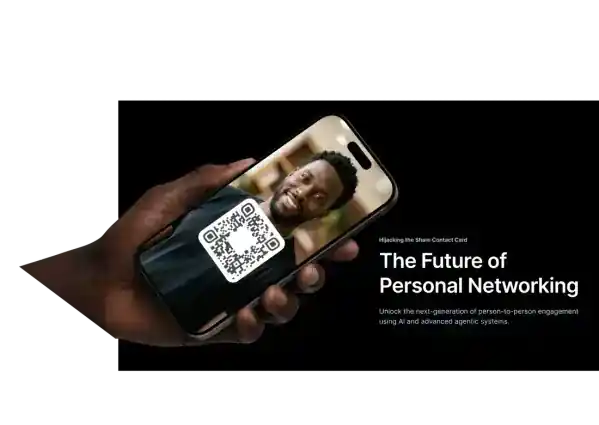
Digital Contact Card Marketing Engine
Marketing engine for digital contact cards across web and iOS.
A digital-contact-card platform delivering a marketing-grade experience across the web and iOS. The team licensed the CleenUI codebase to skip the foundation phase entirely — the auth surface, the multi-tenant data layer, the React components — and start building the product-distinct work on day one.
Deployed onto Azure cloud infrastructure, with every named object (resource groups, app service names, SQL servers, blob containers) configured to the team's own conventions. From license to a working platform their developers could extend without architect supervision: weeks, not quarters.
- Domain
- Digital contact cards
- Location
- Florida, US
- Cloud
- Microsoft Azure
- Launch surface
- Web + iOS

AI Content Startup
Linked micro-content statements that follow a structured syntax.
An AI content startup with a deliberately unconventional thesis: linked micro-content statements that follow a structured, composable syntax. The novelty is in the syntax engine and the discovery surface — both areas where the team needed to spend every cycle of engineering attention.
Licensing CleenUI meant skipping the multi-tenant plumbing, the translation registry, the moderation tooling, and the dozen other primitives the codebase ships with — and letting the team focus on the syntax engine that makes their product distinctive.
- Domain
- Content creation · structured syntax
- Location
- California, US
- Focus
- Syntax engine + discovery surface

FNDRS.io
Helping business owners scale and sell their companies.
FNDRS is a closed-loop exit ecosystem for business owners — a domain where the data model and the workflow surface area are both enormous. Their team started building on CleenUI in October 2025 and had a production platform live within a few months.
The CleenUI codebase gave them the modular monolith to build the FNDRS-specific workflows on top of, without inventing the substrate. Account hierarchy, RBAC, audit history, translation registry, observability — all already there. The team's engineering time went into what makes FNDRS distinct, not the plumbing every B2B SaaS needs.
- Domain
- Exit ecosystem for business owners
- Started building
- October 2025
- Production launch
- Within a few months
- Architecture
- Modular monolith on CleenUI
Task board
Sortable, filterable Kanban board. Drag to reposition cards; filter by assignee, status, or priority. Ships as part of the M07 Project Management & Task Management module.
M07The team behind the codebase.
Shawn and the CleenUI team working through the framework and the production codebase in the office — the same hands-on architecture that ships in every customer engagement.
Be the next case study.
A 30-minute architecture review is the only way teams get started. Let's run yours.
See CleenUI running before you talk to us.
Configure a demo environment in about twenty seconds — theme, spacing, the modules you care about, sample data for your industry — then launch the full dashboard in your browser. Nothing to install, no signup.
- 20 sec setup
- 15 themes
- 20 modules
- 80 industries